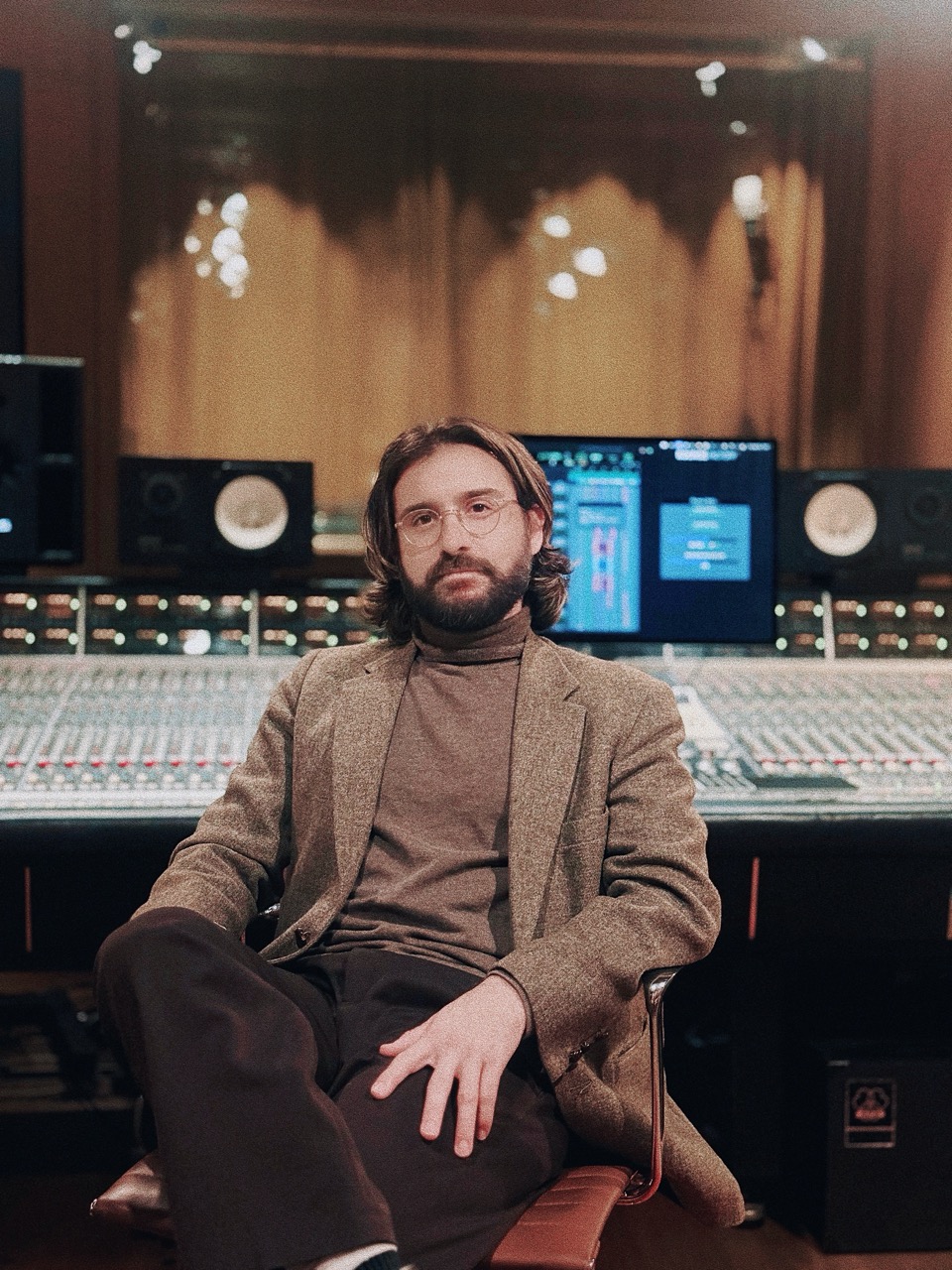
Denis Kosiak is a Grammy-nominated producer, mixer, and recording engineer based in Los Angeles, best known for his years as Khalid's right-hand engineer. Together they worked on Suncity, Free Spirit, Scenic Drive, and nearly 200 collaborations; his work on "Talk" earned a Record of the Year nomination, and he's credited on Justin Bieber's Album of the Year-nominated Justice and co-produced "Silver Platter" on the Grammy-winning Barbie The Album. What makes Denis's story worth studying isn't the credits — it's how it started. He walked in the door at Record Plant without connections, worked his way up through the engineering ranks, met Khalid there as a staff engineer, and turned that into one of the most significant artist-engineer partnerships in modern pop. He also runs a mobile studio setup that follows artists on the road — hotel rooms, tour buses, dressing rooms — with a workflow built for adaptability over perfection. I was excited to sit down with him to talk about proximity, consistency, pricing, travel, and what it actually takes to be the person who gets the call.
When did you stop thinking of yourself as just an engineer and start seeing yourself as someone running a business?
When I was in high school, I couldn't get a job anywhere to save my life. It was 2008/2009 financial crisis, so all of the adults had the lame part time jobs. Instead of getting a job I eventually just found enough goofy young kids to make rap music with for $20 an hour, which was nearly 3x the hourly rate at the time. I worked less, controlled my own schedule and clients, and got to do work that I enjoyed. I haven't stopped since.
You've described Record Plant as "cut-throat" with intense hours. What was the skill you built in that environment that had nothing to do with audio?
It's hard to say which skill in particular, it was mostly a personality rebuilding experience with a tinge of trauma. I don't think I was the right person going into that environment. I did a lot of work on myself since I was failing at lot of interpersonal relationships, getting nervous in performance positions, and also failing miserably when it came to taking accountability and fixing problems. I had to learn a lot of that the hard way, but I'd like to think I do better at it these days after being put in a group position amongst peers. Everything else was a byproduct of getting through that place. I loved that building and the people that were there dearly.
A lot of engineers are still in the "sleeping on couches to catch opportunities" phase. What separates the people who graduate from that phase from the people who get stuck in it?
I still believe a lot of things have to click with making your own luck. It's not manifesting, but rather putting yourself in a position to receive opportunity and upside. People who are still fuckin around or never figured it out often have a harder time with themselves than they do the business itself. When you're young you want quick results and almost feel entitled. Something that really separates people who have a chapter of meaningful success is learning professional business practices aka if you say you're going to do something, do it, and do it fast and good.
You produce, mix, and engineer. That's three different jobs. When someone asks "what do you do," what do you say, and has the answer changed over time?
I typically answer with Production and Mixing, I think engineering is my foundation, but as time has moved on in my career I do far less of it. I think its a natural progression.
You've become strongly associated with vocal production. Was that a deliberate lane choice, or did you just keep getting asked to do vocals until it became your thing?
I spent a lot of time in my early career learning all of the advanced vocal recording and editing techniques, but also loved coaching singers when they needed it. There were tons of artists who loved to sing but had no idea how to put things together.
"DK's Mobile Studio" shows up in credits databases as an engineering location. Running a mobile rig is both a workflow and a positioning statement. Was that strategic or just practical?
It was typically me just running and gunning with a laptop and a mic, maybe a nice pair of headphones to mix. It was mostly a covid era operation where I was packing up my studio and moving between rental houses in Malibu, the Pacific Palisades, the valley, the sierras, Philly and other places across the globe. Was doing all sorts of random music work and was exhausted of trying to remember where and when things happened. I think learning how to travel for business is a skill that you can develop while touring with an artist, it's different from leisure. You gotta sleep less, always be early, eat healthy when you can, take care of yourself, and respond timely to people who are trying to pay you!
When a new artist or label is deciding whether to work with you, what's the thing that closes it?
I'm honestly unsure, I've always felt like every client is a immediate test on how quickly you can do it, but 99% of the time people don't want to pay you what you're worth so theres some strategy to finding the right people that value your work, and it changes over time so you have to constantly build.
You met Khalid at Record Plant in late 2017 and that turned into nearly 200 collaborations. What happened early on that made that relationship become what it became?
I think most of that work relationship became fruitful because he's really just that guy. I had developed a great skillset that matched his needs and he valued what that brought to the table for him, and being less obligated to be stuck in LA helped a ton, sometimes you have to pack your bags and go get the bag with your homies. I think he personally values people, and thats rare. I think we also clicked and had a great friendship as well, could always pick up the phone and laugh at memes and talk about relationships without judgement.
I actually met you through our mutual friend Jon Castelli, and that's a good example of how this industry really works. How deliberate are you about building relationships with other engineers, not just artists and producers?
It can be helpful to have a sense of community so everyone can have some perspective on mutual suffering haha! I'm very intentional about understanding and respecting everyone's unique career, because we've all had to make sacrifices along the way. Thankfully our mutual love of making music brings us together. My best advice, It's a small business and word travels quick. If you're a jerk, everyone finds out pretty quickly. It's important to have yourself in check so you can do good business while also having a good experience moving through your life. If you gravitate towards people with sour reputations and you ignore it, you'll quickly get sucked into their orbit. Be great and learn how to lift others up! My whole career people have said to me at every stage that I'm not good enough yet, I'm lacking in understanding, or I'm not ready and I should do something else that they think I'm better at. Make music, learn, and treat others the way you want to be treated in return.
You've said consistency beats talent. Can you make that concrete — what actually turns consistency into real credits? Not the philosophy, the schedule.
Consistency in this sense isn't a schedule, it's a willingness to show up and work better than anyone even though you aren't the top dog. Always learn and sharpen your skills, but at the end of the day you gotta commit to a late night or answer a call when it's hard. Push yourself. Nobody calling your phone to work? Pick up yours and call someone yourself. Not meeting new artists or managers? Go find them at a show or a social setting. Hit records and big moments are great, but the real consistency comes with people who have a finger on the pulse. Once your talent catches up, you'll be ready for the next wave!
What's the version of "consistency" nobody talks about? The boring, thankless, invisible part that doesn't make it into interviews?
Probably taking care of your health and going to the gym. Be consistent in the gym and with active hobbies so you can have a functioning brain and body!
Do you wish someone had talked to you about money earlier in your career? Not rates, but the actual financial side.
Of course. Hardest part for me has been taxes and chasing royalties!
Walk us through the actual tools. What are you using day to day to run the business side — calendar, invoicing, file delivery, communication?
I can't really talk about any of this publicly out of fear of being hacked! But I vibe-coded an app that did all of this in one, but it ended up being more effort than it needed to be.
You've been supportive of what we're building here. Why? What is it about this conversation, the business of mixing, that you think engineers need to hear?
The business today is not the business of tomorrow, so continue to learn how money moves and position yourself to be where it's going. Make good music along the way.
If you could go back to the version of you who just walked into Record Plant for the first time, and you could only give one piece of advice that has nothing to do with gear or technique, what would it be?
Be kind and learn.
One thing you'd absolutely do again. One thing you'd never do again.
Do: take all the big risks that come my way.
Never do: stop being physically active.